Consob Report on sustainability reporting by Italian listed companies for 2025 published - CONSOB AND ITS ACTIVITIES

Menu
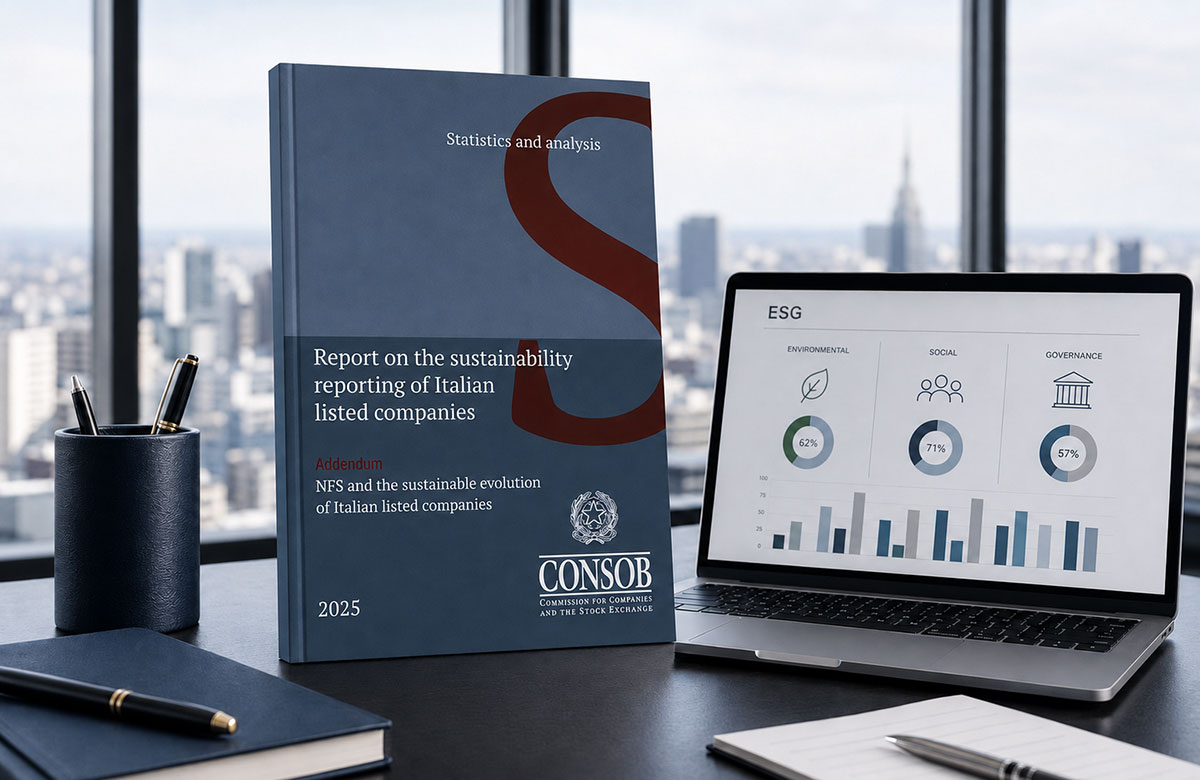
The gradual strengthening of the integration of ESG (Environmental, Social and Governance) issues into business models and governance, which began in 2018, continued in 2025, a year of transition characterised by a process of evolution towards the new regulations. This is what emerges from Consob's 'Report on the sustainability reporting of Italian listed companies' for 2025, the first year of reporting under the framework set out by the European Corporate Sustainability Reporting Directive (CSRD) and the mandatory European Sustainability Reporting Standards (ESRS).
In 2025, 136 Italian companies listed on Euronext Milan published their new sustainability reports, accounting for 69.4% of the total (97.1% in terms of market capitalisation). In 2024, 150 companies had published a non-financial statement or NFS (72% of listed companies, corresponding to 97.2% in terms of market capitalisation).
The 2025 report, based on a sample of 60 companies, was prepared during a period of evolution in the European regulatory framework, recently amended by the Omnibus I Directive, which has eased disclosure requirements and narrowed the scope of application. The evidence shows that companies which will continue to be subject to regulatory obligations from the 2027 financial year onwards have, compared to those that may no longer be obliged to do so, more structured reporting processes, with a greater prevalence of internal procedures for preparing sustainability reports (57% vs 43%), ESG or sustainability plans (73% vs 53%) and more frequently integrate ESG factors into their strategy (25% vs 18%) and into executive remuneration policies (90% vs 67%). Companies no longer required to report, which are smaller in size and have less formalised processes, nevertheless demonstrate a common approach to identifying issues relevant for reporting purposes.
Stakeholder involvement in the double materiality analysis (which assesses the impact of ESG factors on the company and the impact the company itself has on the environment and society) is widespread, affecting 80% of the companies analysed, with frequent participation from suppliers, employees and customers. The Board of Directors is also frequently involved (in over 93% of cases) in the double materiality process.
Climate change remains a priority for all the companies analysed, although only 13% of the sample state that they have a climate transition plan in place, whilst 17% plan to adopt one in the near future. As regards social issues, impacts relating to the company's workforce are significant for all companies.
Finally, the role of ESG factors in remuneration policies is becoming increasingly prominent: 78% of the companies in the sample (and 90% of those that will be required to report on sustainability in the future) have incorporated them into the variable remuneration of their CEOs.
In view of the shift in regulatory requirements, this year's Report is supplemented by an addendum that traces the evolution of trends recorded between 2018 and 2024, drawing on Consob reports relating to companies that have published their DNFs. The addendum highlights how, over this period, stakeholder engagement has gradually increased, as has the role of the board of directors in materiality analysis; the establishment of sustainability committees has grown, and the inclusion of ESG objectives in executive remuneration schemes has seen significant increases. A picture emerges of a structural transformation of reporting processes and corporate governance in listed companies towards models more oriented towards sustainability.
SEE ALSO